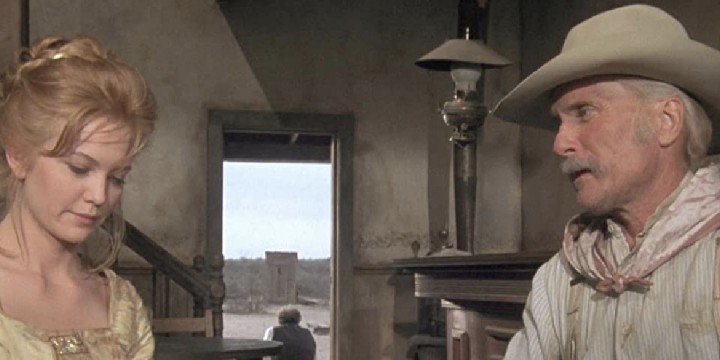
The Enduring Appeal of Augustus McCrae's Wisdom and Wit
In the vast literary landscape of the American West, few characters resonate as deeply and universally as Augustus "Gus" McCrae from Larry McMurtry's Pulitzer Prize-winning novel, Lonesome Dove. A retired Texas Ranger, philosopher, rogue, and unwavering friend, Gus's distinctive voice is etched into the hearts of readers and viewers alike. His observations on life, love, death, and the often-absurd journey in between are a masterclass in folksy wisdom, laced with a generous dose of sharp wit. Exploring Gus McCrae quotes is not merely revisiting memorable lines; it's delving into a rich tapestry of human experience, distilled through the eyes of a true original.
Gus McCrae is more than just a character; he's a sage of the prairie, a man whose profound insights are often disguised by his playful banter or cynical outlook. His words offer a unique blend of practicality, melancholy, and unshakeable hope, making his sayings incredibly relevant even today. Whether you're seeking guidance on contentment, pondering the nature of friendship, or simply looking for a good chuckle, Augustus McCrae has a quote that speaks to the soul.
Augustus McCrae's Irreverent Wit and Unforgettable Banter
One of Gus's most charming and defining characteristics is his biting wit, often directed at his stoic, long-suffering partner, Woodrow F. Call, or used to comment on the absurdity of their endeavors. His humor is a coping mechanism, a way to lighten the grim realities of the frontier, and a testament to his vibrant personality.
- "I take it back, Woodrow. I have no doubt you’ll miss me. You’ll probably die of boredom this winter and I’ll never get to Clara’s orchard."
This gem perfectly encapsulates Gus's playful antagonism towards Call, subtly hinting at his own desires (Clara's orchard) while humorously predicting Call's fate without his lively presence. It's a testament to their deep, if often unstated, bond, showcasing Gus's understanding of Call's solitary nature and perhaps a touch of his own fear of being forgotten. - "Call’s gone to round up a dern bunch of cowboys so we can head out for Montana with a dern bunch of cows and suffer for the rest of our lives."
Spoken with classic Gus cynicism, this quote perfectly summarizes the epic, arduous cattle drive to Montana. It’s a moment of sardonic foresight, recognizing the immense hardship ahead, yet also hinting at the irresistible pull of adventure and the cowboy spirit that drives them. Gus articulates the unspoken truth of their journey: it will be tough, but it is their chosen path. - "It’s just that it’s fearsome for a man to have a woman start thinking right in front of him. It always leads to trouble."
This line, delivered with a twinkle in his eye, is vintage Gus – a playful jab at traditional gender roles wrapped in a humorous, exaggerated complaint. While seemingly anti-intellectual, it's more about his appreciation for women's spirited independence and the lively challenges they present, rather than a genuine fear. It highlights his complex, often admiring, view of women. - "Well, Call, I guess they forgot us, like they forgot the Alamo. Why wouldn’t they? We ain’t been around. That ain’t the reason—the reason is we didn’t die."
This poignant yet darkly humorous exchange with Call speaks volumes about legacy, memory, and the harsh realities of frontier life. Gus suggests that to be remembered in the grand narratives of history, one must often meet a dramatic end. Their continued existence, in his view, makes them less noteworthy to the annals of history, a profound commentary on the nature of heroism and recognition.
Gus McCrae’s humor isn't just for laughs; it’s a vital part of his philosophy, allowing him to face adversity with a smirk and to connect with others, even when he seems to be pushing them away. It's a reminder that even in the toughest times, finding a moment for wit can be a powerful balm.
Gus McCrae's Profound Wisdom: On Life, Contentment, and Experience
Beyond the humor, Gus offers profound insights into the human condition, often delivered in deceptively simple language. His philosophy leans towards an appreciation of the present moment and the subtle beauties of everyday existence.
- "Lorie darlin', life in San Francisco, you see, is still just life. If you want any one thing too badly, it's likely to turn out to be a disappointment. The only healthy way to live life is to learn to like all the little everyday things, like a sip of good whiskey in the evening, a soft bed, a glass of buttermilk, or a feisty gentleman like myself."
This is perhaps one of the most famous Gus McCrae quotes and a cornerstone of his personal philosophy. It's a powerful lesson in contentment, advising against the dangers of chasing an idealized future or singular desire too fervently. Instead, Gus champions the wisdom of finding joy in the mundane, the comfort of routine, and the simple pleasures that truly make life rich. It's a call to mindfulness, long before the term became popular, encouraging us to appreciate what we have rather than pine for what we lack. - "The older the violin, the sweeter the music."
A beautiful metaphor that speaks to the value of age and experience. Gus understood that true depth, character, and beauty often mature with time, just like a fine instrument whose sound mellows and enriches over decades. This quote celebrates the wisdom gained through a lived life, suggesting that the "music" of an older person's soul or story is inherently richer and more resonant. It encourages an appreciation for the seasoned, the aged, and the experienced, in both people and objects. - "Uva uvam vivendo varia fit."
This Latin phrase, which translates to "A grape by living ripens," is a profound nod to the natural process of growth, patience, and transformation. Gus, a man deeply connected to the land and its cycles, uses this to convey that true change and maturation happen gradually, through the very act of living. It's an encouragement to embrace life's journey, trusting that experiences, both good and bad, contribute to our eventual ripening.
These reflections highlight Gus's deep understanding of human nature and the pursuit of happiness. He encourages a philosophy of acceptance, finding beauty in the everyday, and valuing the wisdom that only time and experience can provide. To truly grasp the essence of Augustus McCrae, one must appreciate this blend of worldly cynicism and profound appreciation for life.
Reflections on Identity, The Cowboy Way, and Unconventional Wisdom
Gus McCrae's observations often extend to the very fabric of their existence – the life of a cowboy, the unforgiving land, and the unique identity forged by such a demanding world. His insights cut through pretense, revealing fundamental truths.
- "Men who didn’t know how to get on and off a horse would not be much use around a cow outfit."
This simple, pragmatic statement underscores Gus's belief in fundamental competence and practicality. In the harsh world of the frontier, utility and basic skills were paramount. It's a reminder that true value often lies in foundational abilities, not superficial appearances, and that genuine experience is irreplaceable when it comes to living and thriving in a specific environment. - "They were people of the horse, not of the town; in that they were more like the Comanches than Call would ever have admitted."
Here, Gus articulates a profound truth about his and Call's identities, and indeed the identity of many frontiersmen. It speaks to a deep, almost primal connection with nature, nomadic life, and a rejection of settled, civilized existence. Comparing themselves to the Comanches, a feared and respected native tribe, is a striking observation that Call would never openly acknowledge, highlighting Gus's unconventional perspective and his willingness to see beyond societal prejudices. It emphasizes their shared wild spirit and independence.
Gus McCrae didn't just live the cowboy life; he analyzed it, critiqued it, and ultimately, loved it with all its imperfections. His words give us a window into the soul of the frontier, revealing the profound connections between humans, animals, and the untamed land.
Why Gus McCrae's Words Continue to Resonate
The enduring popularity of Gus McCrae quotes stems from their universal applicability and the timeless wisdom they impart. He speaks to our desire for adventure, our need for friendship, our struggles with life's disappointments, and our quest for meaning. Gus embodies a spirit of resilience, humor, and an unvarnished honesty that is refreshingly rare.
His philosophical musings, often delivered amidst the dust and danger of the cattle drive, offer practical tips for navigating our own complex lives:
- Embrace the Everyday: Find joy in the small, consistent pleasures rather than fixating on grand, elusive goals.
- Value Experience: Recognize that time and hardship often lead to deeper wisdom and character.
- Face Life with Wit: Use humor as a tool to cope with adversity and maintain perspective.
- Understand Human Nature: Look beyond the surface to grasp the true motivations and identities of yourself and others.
Gus McCrae's words are a constant reminder that life, even at its toughest, holds moments of profound beauty, deep camaraderie, and opportunities for reflection. For those who wish to explore further into his iconic sayings and the lessons they offer, you might find value in visiting articles such as Gus McCrae's Enduring Wisdom: Life Lessons from Lonesome Dove and Explore Gus McCrae's Most Memorable Quotes from Lonesome Dove.
Conclusion
Augustus McCrae, with his sharp tongue and even sharper mind, carved out an unforgettable place in literary history. His collection of insightful and often hilarious Gus McCrae quotes continues to inspire, challenge, and entertain generations of readers. He teaches us to appreciate the journey, value our companions, and find joy in the "little everyday things." More than just a cowboy, Gus McCrae remains a quintessential guide to living a full, if sometimes flawed, life—a true philosopher of the American frontier whose wisdom and wit echo across the plains of time.